


WHAT IS ABA
Applied behavior analysis (ABA)
is a science‑based approach that focuses on understanding behavior and helping children learn safer, more effective ways to communicate their needs.
What is ABA?
ABA is an applied science used to understand behavior, support development, and teach meaningful skills. It relies on observation, ongoing assessment, and data to help guide decisions about how best to support each child. The support provided through ABA is individualized, with goals and strategies shaped by each child’s strengths, needs, and progress over time. It focuses on meaningful skills such as communication, coping, and independence, while promoting the child’s comfort, engagement, and participation.
OUR CLINICAL APPROACH
Behavioral interventions represent the root of our philosophy.
At REACH, ABA is applied through an approach that is individualized, responsive, and grounded in each child’s everyday life.
We focus on understanding each child as an individual, using observation and data to shape support that is meaningful, practical, and relevant. At the same time, we prioritize a respectful, child-centered approach, where the child’s engagement, participation, and willingness to be involved guide how intervention is delivered.
At REACH, intervention is organized around clear, individualized goals, developed through ongoing assessment and collaboration with families.
Each child’s program is designed based on their strengths, needs, and current level of functioning. Skills are taught in small, achievable steps, with progress monitored continuously through data collection and regular review.
This may include supporting a child to request help, participate in group activities, develop play skills, or increase independence in daily routines. Teaching takes place across structured activities and naturalistic interactions, so that skills can generalize to everyday situations.
Programs are regularly adjusted based on progress and response to intervention, ensuring that support remains relevant, effective, and aligned with each child’s development.
Our program is built around individualized support designed to reflect each child’s strengths, needs, and developmental level.
In the initial phase, a structured assessment is carried out using standardized tools (such as ABLLS-R or VB-MAPP). Based on this, an Individual Care Plan (ICP) is developed in collaboration with the family, defining clear and meaningful goals.
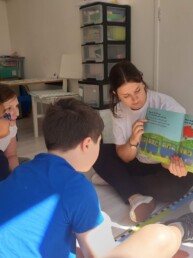
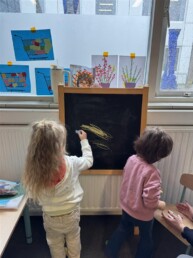
Support is delivered through individual sessions and, when appropriate, small group activities, where children can practice skills across different contexts, including play, structured learning, and shared activities such as art, music, and movement.
Progress is continuously monitored, and the program is regularly reviewed and adjusted based on the child’s response. A more comprehensive re-assessment is conducted every 6–12 months, depending on the needs of the child and context, ensuring that goals and supports remain relevant over time.
At REACH, ABA is used to support the development of meaningful skills through structured teaching, ongoing assessment, and data-informed decision-making. Skills are broken down into manageable steps and taught progressively, with reinforcement used to support learning and engagement.
Intervention is continuously reviewed and adapted based on the child’s response, ensuring that teaching remains effective, individualized, and relevant to everyday life.
Behavioral intervention is supported by decades of research showing its effectiveness in supporting the development of communication, learning, and independence in children with autism.
Research highlights the importance of early and intensive support, but also shows that meaningful progress can be achieved across different ages and developmental levels. Outcomes vary depending on the child, the goals of intervention, and the context in which support is provided.
At REACH, this translates into a focus on individualized goals, structured intervention, and close collaboration with families—factors consistently associated with more effective and sustainable outcomes.
Progress is not defined by a single outcome, but by meaningful improvements in daily life, such as increased communication, participation, independence, and engagement.


FACTS ABOUT ABA
We understand that questions about ABA are common. At REACH, our work is guided by clear principles that shape how support is delivered in practice.
Programs are developed and overseen by trained and certified professionals, working within established ethical frameworks such as BACB/QBA standards and Dutch professional guidelines (SKJ). This ensures that care is delivered responsibly, safely, and with clear clinical oversight.
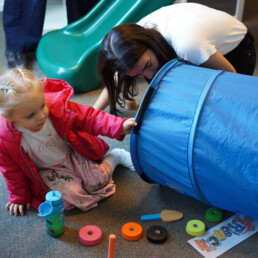
Support is tailored to each child, based on their strengths, needs, and interests. Learning is integrated into play, interaction, and everyday activities, allowing skills to develop in a way that is meaningful, age-appropriate, and respectful of the child’s experience.
Intervention is guided by ongoing observation and data. Programs are continuously reviewed and adapted based on each child’s progress, ensuring that support remains relevant and effective over time.
The goal of intervention is to support development and increasing independence. As skills strengthen, support is gradually adapted so that children can use what they learn across different settings and situations.
Learning takes place through play, interaction, and everyday routines. Activities are designed to be motivating and appropriate, allowing skills to develop in a natural and meaningful way.
Research highlights the importance of sufficient intensity in supporting progress. At REACH, intervention is planned to reflect each child’s needs and goals, rather than following a fixed model. Support is delivered through engaging, play-based and motivating activities, ensuring that intensity remains both effective and sustainable in daily practice.
Have a question or want to learn more?
If you would like to know more about our approach, our programs, or whether REACH could be a good fit, we would be happy to hear from you.
You are welcome to get in touch with any questions, or to explore the next steps at your own pace.